


Minister Apologizes for "Ill-Judged" Nazi Germany Comparison in Speech..
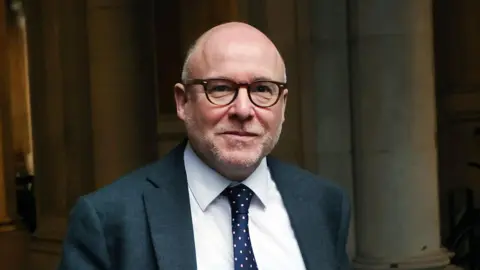
**Attorney General Faces Backlash After Comparing UK Legal Reform Debate to 1930s Germany**
The Attorney General, Lord Hermer, has expressed regret over what he called "clausy" remarks made during a speech on Thursday, in which he drew parallels between contemporary UK political debates and legal arguments in pre-Nazi Germany.
Speaking on the rule of law, Lord Hermer criticized those advocating for Britain to "cast aside the constraints of international law in favor of raw power," warning that similar rhetoric was employed by German legal theorists in the 1930s before the erosion of democratic norms.
The comparison sparked immediate condemnation, with Conservative leader Kemi Badenoch accusing him of effectively "labeling political opponents as Nazis" and calling for his dismissal. "This kind of inflammatory rhetoric has no place in serious debate," Badenoch said.
In a subsequent statement, Lord Hermer acknowledged his analogy was "poorly phrased" but maintained his broader concern about safeguarding legal institutions. "I regret any offense caused by my historical reference, which was intended to highlight risks to judicial independence, not to make direct comparisons," he said.
Downing Street declined to comment on calls for his removal, but legal experts noted the episode underscores growing tensions over the UK's relationship with international law. Holocaust educational charities reiterated the need for caution when invoking Nazi-era comparisons in political discourse.
*The controversy comes amid heated parliamentary debates over proposed reforms to the UK's human rights framework.*
Attorney General Defends Speech Amid Controversy Over Nazi Germany Comparison
A spokesperson for Attorney General Lord Hermer stated that he rejects the Conservative Party’s characterization of his recent speech but acknowledges that his "choice of words was clumsy" and regrets the reference he made. The spokesperson emphasized that the speech was intended to defend international law, which "underpins our security, protects against threats from aggressive states like Russia, and helps tackle organized immigration crime" 210.
Key Points from Lord Hermer’s RUSI Speech
Speaking
at the Royal United Services Institute (RUSI), Lord Hermer outlined the
Labour government’s approach to foreign policy, which he described as
combining a "pragmatic approach to the UK’s national interests with a principled commitment to a rules-based international order." He criticized what he called the "siren song" heard in Westminster and sections of the media advocating for Britain to abandon international legal constraints in favor of "raw power" 29.
Hermer argued that this mindset was not new, drawing a historical parallel to 1930s Germany, where legal theorists like Carl Schmitt—a Nazi Party supporter—argued that state power should override law. He noted that after Hitler’s rise in 1933, post-war institutions were rebuilt to reinforce international law 23.
Conservative and Reform Backlash
The comparison sparked fierce criticism from Tory leader Kemi Badenoch and Reform UK figures. Badenoch accused Hermer of "calling people who disagree with him Nazis" and demanded Prime Minister Keir Starmer sack him, calling the remarks "appalling judgement" and "dangerous" 27. Reform UK’s Richard Tice similarly condemned the analogy, stating that Hermer’s "clumsy" apology was insufficient and that he was "unfit to be Attorney General" 310.
Context: ECHR Debate
The
controversy comes amid ongoing debates over the UK’s membership in the
European Convention on Human Rights (ECHR). Critics, including some
Conservatives and Reform UK members, argue the ECHR hampers efforts to
control migration, such as deporting Channel-crossing asylum seekers.
Badenoch has previously suggested the UK may need to leave the ECHR if
it obstructs national interests 25.
Government’s Stance
Despite
the backlash, Hermer’s spokesperson reiterated his commitment to
international law, stressing its role in global security and reform.
Education Minister Catherine McKinnell defended the speech as "thoughtful," warning that withdrawing from international frameworks aligns with "the agenda of people like Putin" 510.
Conclusion
While
Lord Hermer stands by his broader argument, the Nazi comparison has
overshadowed his message, fueling calls for his resignation and
intensifying political divisions over the UK’s legal obligations. The
episode underscores the charged nature of debates surrounding
sovereignty, migration, and international cooperation 17...

No comments: